Thoughts on AGI and Creating for Learning and Entertainment
Why I think AI crossed the AGI line for digital work in 2026, and how building apps, videos and 3-D Bible temples has become my new way to learn and have fun.
Why I think AI crossed the AGI line for digital work in 2026, and how building apps, videos and 3-D Bible temples has become my new way to learn and have fun.
YouTube recommended me this video over the weekend. It recounts the story and testimony of a fighter pilot, call sign Bravo. He and his crewmate were shot down over Iran earlier this year, behind enemy lines. The story of his survival and rescue is absolutely insane. [294 words]
External memory for both people and AI has been on my mind the last few weeks. I’m amazed at how useful these external memory systems are for increasing human and AI effectiveness. For people, there is a whole branch of study called PKM or Personal Knowledge Management. There are so many tools nowadays that help with this like Obsidian, Notion or Apple Notes. I’ve always been one to write things down because I have a poor memory. I learned quickly if I wanted to remember something I had to… [1,031 words]
When OpenClaw came out last year, I was interested in using it to create a useful personal assistant. I liked the idea of a running agent on my local Mac and being able to message it using messaging platforms like Telegram. I used for a month or so but it never caught on with me. It was kind of buggy and not the most reliable or useful. [608 words]
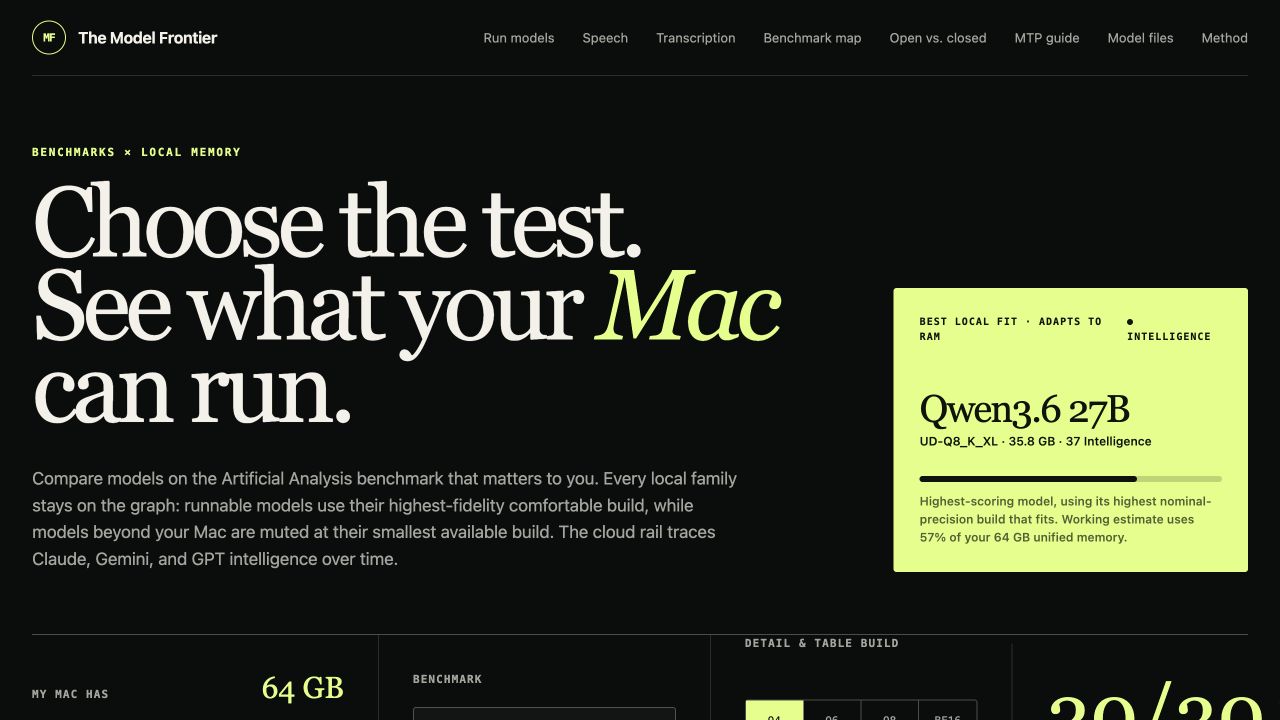
I built a model map that connects benchmark intelligence, quantized model size, Mac memory, and the tools needed to run an open model locally.
LeBron James is signing with the Philadelphia 76ers for two years and $8 million, with a player option in the second year. He made more than $50 million last season. Even at 41, this seems like crazy value. [250 words]
I was going back through my AI Engineer World’s Fair 2026 watch list and re-watched Garry Tan’s “The New Physics of Business” keynote. About four minutes in, he says: [498 words]
Since Fable 5 came back online, you’ve been allowed to use it in the Claude subscription. Anthropic has said that at a certain point they would remove it from the subscription and you’d have to pay per token for Fable. They’ve pushed back 3 times now. The latest date is now July 19: [247 words]
AI Engineer World’s Fair 2026 just wrapped in San Francisco, and the AI Engineer YouTube channel has started posting talks. I wanted a quick way to decide what to watch first, so I pulled the current video metadata and ranked the posted talks by views per day. Note this post and all of the code associated with grabbing the data was written by GPT 5.5 (High) using the Codex harness. [7,471 words]
I wanted to compare Claude Fable 5 and GPT Sol 5.6 since OpenAI released Sol last week and I still have access to Claude Fable 5 through my Claude subscription. [695 words]
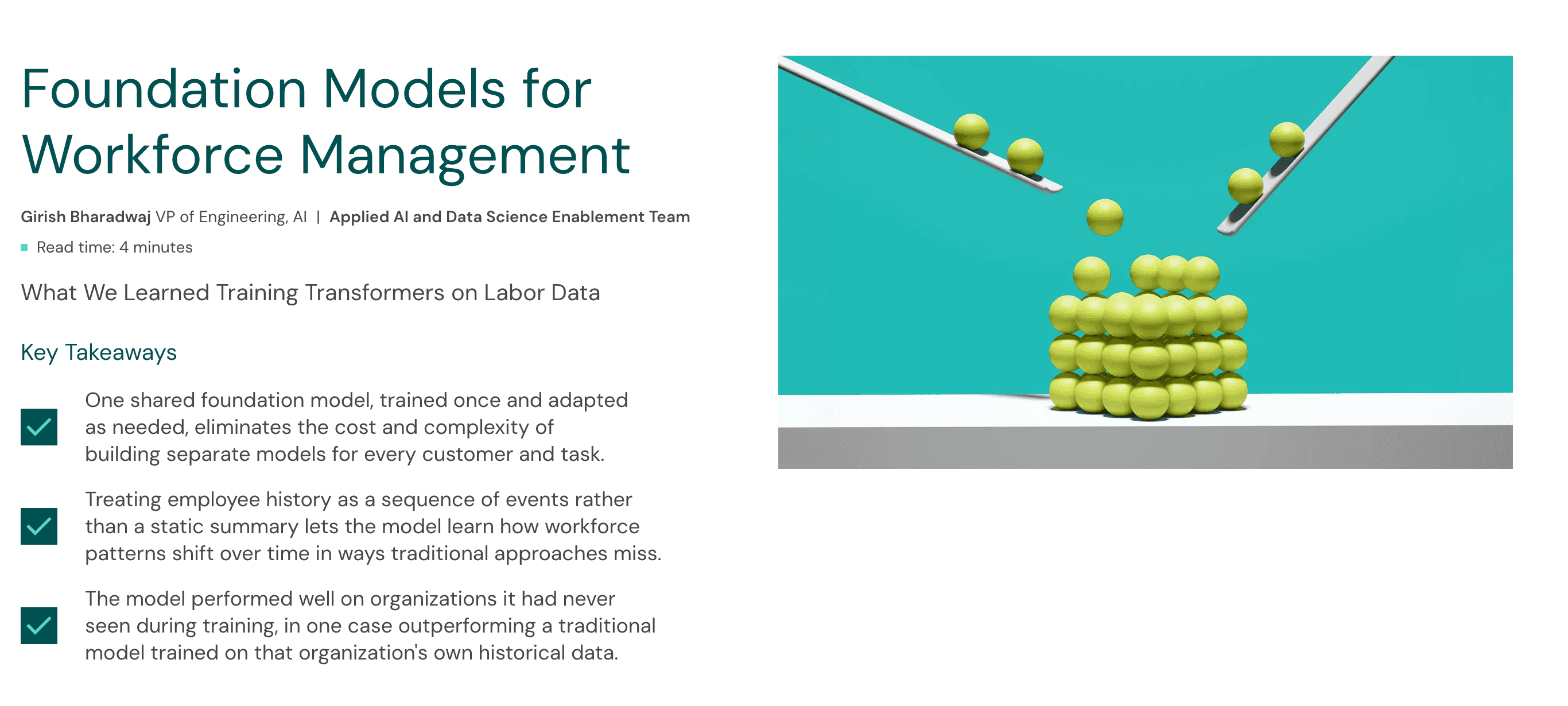
I love reading technical blogs at other companies. I’ve learned so much from blogs especially ones from Anthropic and LangChain. It’s exciting that we’re starting one at UKG. One of the posts, Foundation Models for Workforce Management showcases some of the work my AI team at UKG has been working on. [270 words]
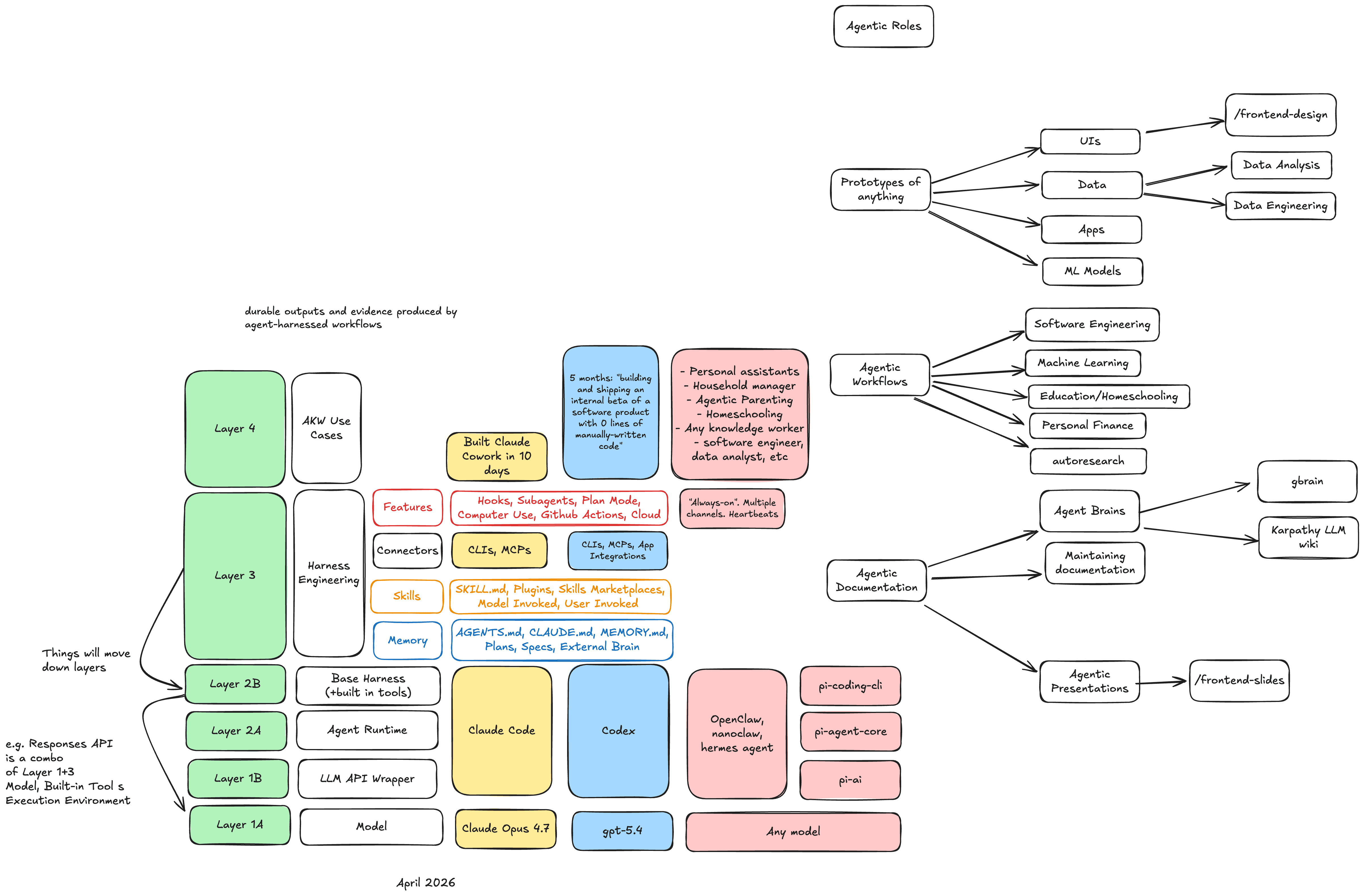
Knowledge work is changing fast. I gave a talk today about what it actually means to work effectively in 2026, when AI agents can write code, run research, manage memory, and coordinate with tools on your behalf. [204 words]
Agent Skills in coding agents like Claude Code and Codex always remind me of the helicopter scene from the Matrix. You are literally giving your agents new skills via files (amazingly just plaintext markdown files). [44 words]
In this 2-hour hands-on tutorial, I break down how AI coding agents actually work — starting with Claude Cowork, how coding agents like this compare with ChatGPT and then building up to Claude Code, Skills, and real-world demos you can use today. [563 words]
Today is Good Friday. Growing up I never asked the question why is Good Friday good. Why would a person who wasn’t evil dying on the cross be something good? I hope to briefly explain why Good Friday is such an important Christian holiday. [1,093 words]
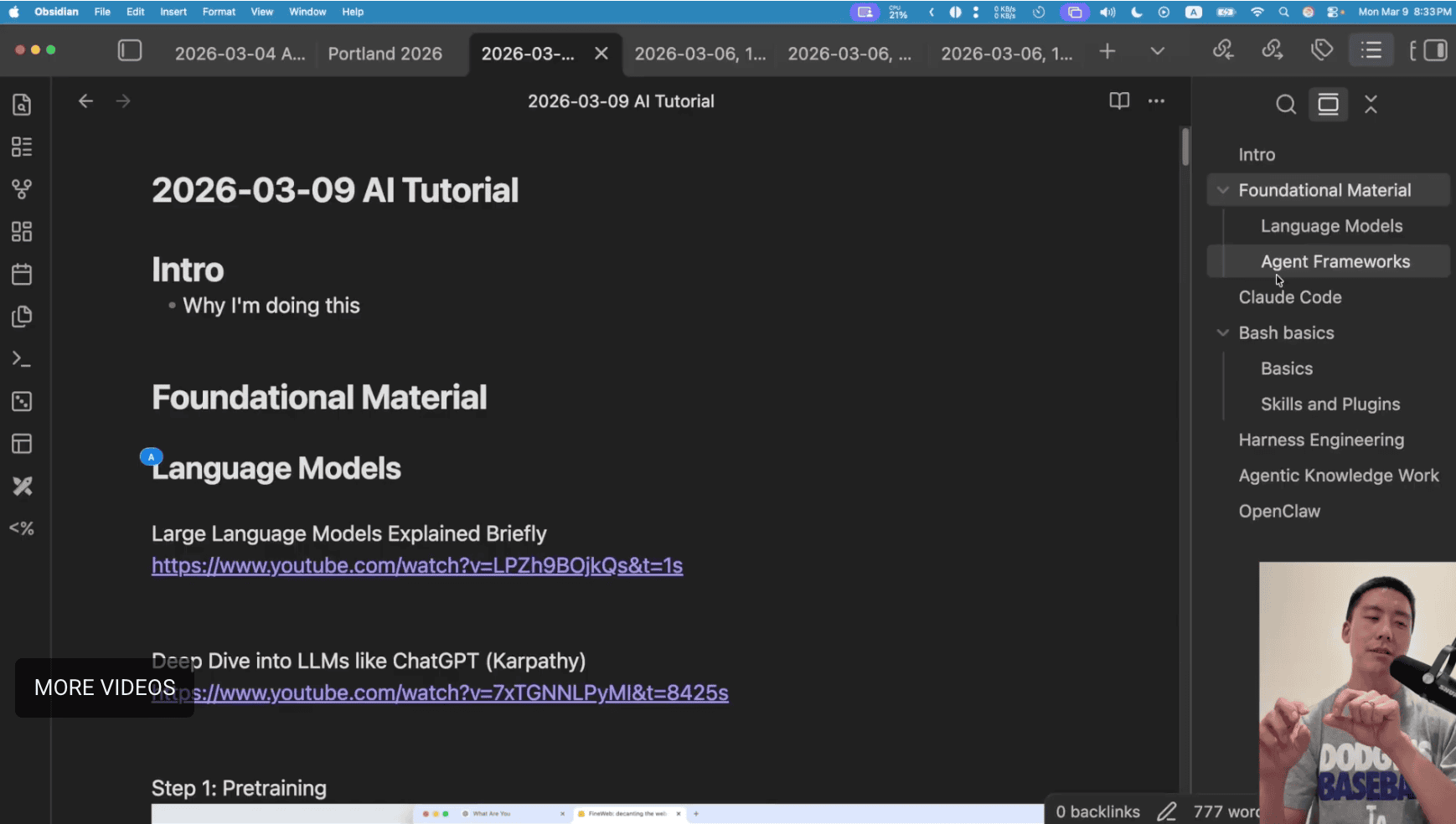
Knowledge work is changing fast. I think within a few years, most knowledge work (any work done on a computer) will be done better by an AI Agent or at least by a person managing AI Agents. I encourage every knowledge worker to start learning about AI. I did a live AI tutorial for some friends a few weeks ago. The recording wasn’t really good because my OBS settings were right. [149 words]
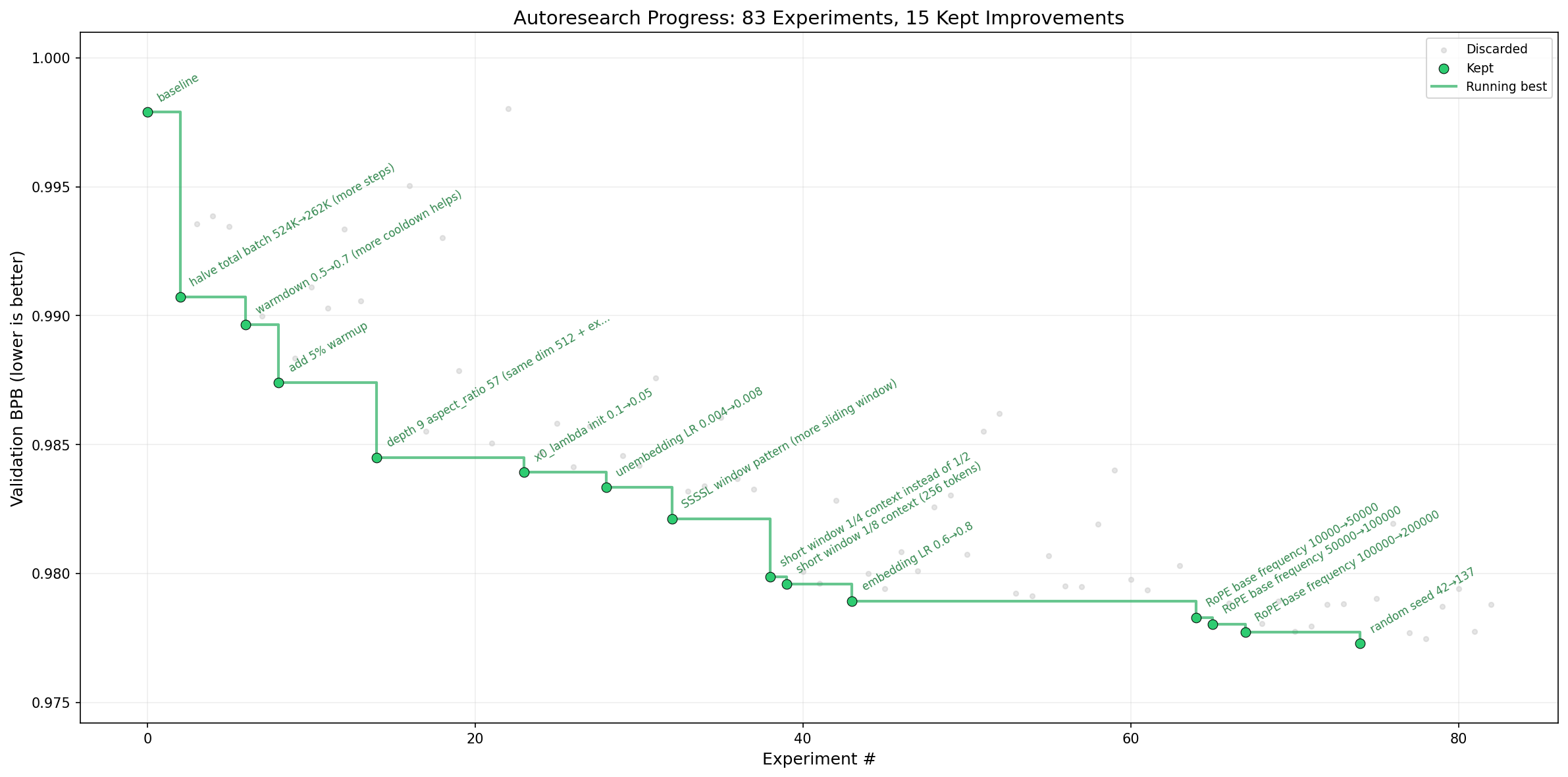
Coding agents have enabled a lot of things. Many things are now possible that weren’t possible before. Andrej Karpathy’s repo autoresearch is a prime example of this. It’s an example of what automated intelligence can do. I think it’s one of the first killer apps that coding agents like Claude Code unlocks. [312 words]
It’s hard to believe it’s been 3 years since I started this blog. The first post was simply a list of useful Mac applications. [228 words]
In the era of agentic knowledge work, AI isn’t replacing human skills — it’s amplifying them. [1,011 words]
With improving capability, every point in time has an optimal setup that keeps changing and evolving and the community average tracks the point. None -> Tab -> Agent -> Parallel agents -> Agent Teams (?) -> ??? If you’re too conservative, you’re leaving leverage on the table. If you’re too aggressive, you’re net creating more chaos than doing useful work. The art of the process is spending 80% of the time getting work done in the setup you’re comfortable with and that actually works, and 20% exploration of what might be the next step up even if it doesn’t work yet.
To get the most out of the tools that have become available now, you have to remove yourself as the bottleneck. You can’t be there to prompt the next thing. You take yourself outside. You have to arrange things such that they’re completely autonomous. And the more, you know, how can you maximize your token throughput and not be in the loop? This is the goal. And so I kind of mentioned that the name of the game now is to increase your leverage. I put in just very few tokens just once in a while, and a huge amount of stuff happens on my behalf. And so, auto-research, like I tweeted that, and I think people liked it and whatnot, but it doesn’t. They haven’t maybe worked through the implications of that. And for me, auto research is an example of an implication of that. Where it’s like, I don’t want to be the researcher in the loop, looking at results, et cetera. I’m holding the system back. So the question is, how do I refactor all the abstractions so that I’m not I have to arrange it once and hit go. The name of the game is how can you get more agents running for longer periods of time without your involvement, doing stuff on your behalf. And autoresearch is just, yeah, here’s an objective, here’s a metric, here’s your boundaries of what you can and cannot do, and go.
My best practices, favorite skills, plugins, tools and MCPs for Claude Code. A living document of what actually works when building with agentic coding tools. [29 words]
I put together a short video showing how to breakdown a whole brisket from Costco. Processing meat this way saves you about $11-13/lb of prime beef if you compare store-bought sliced prime brisket vs. doing it yourself. [314 words]
An agentic machine learning plugin that lets AI assistants run ML workflows autonomously — data prep, training, evaluation — without needing to prompt each step manually. [30 words]
I’ve enjoyed learning about agent skills over the past few months. I’ve learned a lot browsing some skills marketplaces and plugins. Some of my favorite have been: [223 words]
A Cookiecutter template for building an agent skills marketplace — scaffold the boilerplate for packaging, distributing, and discovering skills for AI agents. [26 words]
A collection of agent skills for Claude Code and other AI assistants — reusable, composable tasks that extend what agents can do out of the box. [30 words]
Below is an AI Tutorial I did for some friends. Unfortunately my OBS resolution was set too high so not every frame was captured in the video. [739 words]
Johannes Gutenberg invented the printing press in Germany around 1440. This new machine that had movable type could print 3,600 pages per day compared to 40 by hand. This is a 90x speedup. It certainly made mass printing books possible because the cost plummeted. But the effect wasn’t merely that books got copied faster. The written word became important. Ideas could now spread rapidly. Skills like reading and writing became much more important in this era after the printing press. Society was… [1,977 words]
I just wrapped up 15 days of Claude Code Tips. You can find them all here. [88 words]
I wanted to take some time to write some reflections on my experiences using AI since the end of 2022 to today, Feb 2026. [2,231 words]
As a daily Claude Code user for the last 6 months, I’ve learned a lot about Claude Code and agentic coding in general. Trying this thing where I share 1 thing per day. I’m posting on LinkedIn but I’ll update this post with each tip. [2,558 words]
I’ve had the chance to take my kids on various field trips this year as we’ve been homeschooling them. Two of the more interesting ones were to Costco and Amazon. I love Costco, it’s probably my favorite retailer. My family looks forward to going every time we go. Anything I can’t get at Costco is likely bought from Amazon. Amazon is the second largest retailer in the US while Costco is #3 (Walmart is #1). [1,184 words]
This is the first time I’m taking some time to do a year in review and posting it on my blog. Overall I’ve enjoyed the exercise of writing and sharing ideas about things I’ve learned across a variety of topics with others. The main categories I’ve written about thus far are about AI and personal finances. I wrote my first book review and would like to write more of those. I’d like to also continue blogging next year. [2,584 words]
I recently took advantage of a strategy called “bunching” where you combine multiple years of charitable contributions into one year. I’ll use a made up example here but you could plug in your own numbers. [1,718 words]
Starting a new type of post where I’ll review books. I recently read A Little Theology of Exercise: Enjoying Christ in Body and Soul by David Mathis. The beginning part of the book is available for free here. The audio book (~2 hours) is also free on Spotify if you’re a premium subscriber. [1,348 words]
Transcripts for various YouTube channels, inspired by Karpathy’s Lexicap. Useful for searching and reading through long-form AI content without watching the full video. [28 words]
I did it. I ran a marathon. Long Beach 2025 Marathon is finished. What an amazing race day and training block. I’ve heard that a race is a celebration of the training you have put in. That rings so much truer now that the race is over. All those easy runs, tempo/interval runs, long runs on Saturday or Sundays. It’s been a long journey with many ups and downs along the way. [2,023 words]
I was recently asked how you can learn AI. This is a pretty difficult question to answer because 1) AI’s development is so rapid and 2) everyone is coming from a different starting place and 3) people have different use cases. Il’l try my best here. [1,489 words]
“Today I Learned” — a running log of small things I’ve picked up across programming, data science, and tools. Inspired by Simon Willison’s TIL format. [33 words]
An MCP (Model Context Protocol) server for the Lightcast API, enabling AI assistants to query labor market data, job postings, and skills data directly. [28 words]
Model Context Protocol (MCP) has quickly become a standard interface for how agents and LLM-powered clients interact with tools and APIs. What’s exciting is that some companies are already hosting public-facing MCP servers with authorization. For example, Atlassian provides one here: Getting Started with the Atlassian Remote MCP Server. Their MCP server lives at: https://mcp.atlassian.com/v1/sse. [1,038 words]
Claude had a conference recently all about Claude Code. I transcribed all of the talks using transcripts and hosted it here. The YouTube playlist is here. Below are summaries of the talks. [3,495 words]
I’ve learned a lot about Claude Code and agentic coding tools from Armin Ronacher. He’s the creator of Flask and Jinja and he’s very interested in Agentic coding tools. This talk was really great. Some things I learned: [520 words]
Every hosted a Claude Code Camp today for an hour. Different members from their team shared in detail how they use Claude Code. I’ve only started using Claude Code in my developer workflow in the past 2-3 weeks so it was super helpful to see how the team was using it. [951 words]
I had tried Claude Code briefly when it first came out 4 months ago. However I wasn’t that impressed. Lately though, I’ve seen more and more people turn to Claude Code. The step change was the release of Claude 4 Sonnet and Opus on May 22, 2025. I think something was unlocked where given a powerful enough reasoning model (Claude 4) and access to generic tools, Claude Code is an amazing tool. [597 words]
I tried my best to condense the ~16 hours of content from the LangChain Interrupt Conference to less than an hour. [31 words]
As I’ve talked to different people at work and amongst friends, there is a growing gap between those that use AI (mostly ChatGPT) and those that do not. It got me thinking there are levels to this for both developers (or anyone who writes code as part of their job) and non-developers (those that do not write code). [1,042 words]
This page contains AI-generated summaries of the LangChain Interrupt 2025 conference talks. [7,541 words]
The questions and answers extracted from the fireside chat between Harrison Chase (LangChain) and Andrew Ng (AI Fund) at LangChain Interrupt 2025. [5,263 words]
I had the privilege of attending LangChain’s first conference. The first day was a hands-on workshop going through the creation of an agent (an email assistant) from scratch. It went through many of the components of building an agent: [2,984 words]
I’ve been experimenting with writing CLI utilities to fetch and summarize YouTube videos. This is primarily for personal use. May open source the CLI in the future. The CLI is called yt-transcript. The model I used was gpt-4o-mini. The summary of Andrej Karpathy’s Deep Dive into LLMs video is below: [2,263 words]
Second half-marathon complete (Strava)! Goals for this race at Surf City 2025 was just to 1) not get injured and 2) beat my first HM time of 1:49. Felt like the conditions were perfect in terms of the weather, how the body felt and having other runners to run with at certain points. Thankful to have achieved both those goals! By God’s grace was able to PR and run 1:42. [335 words]
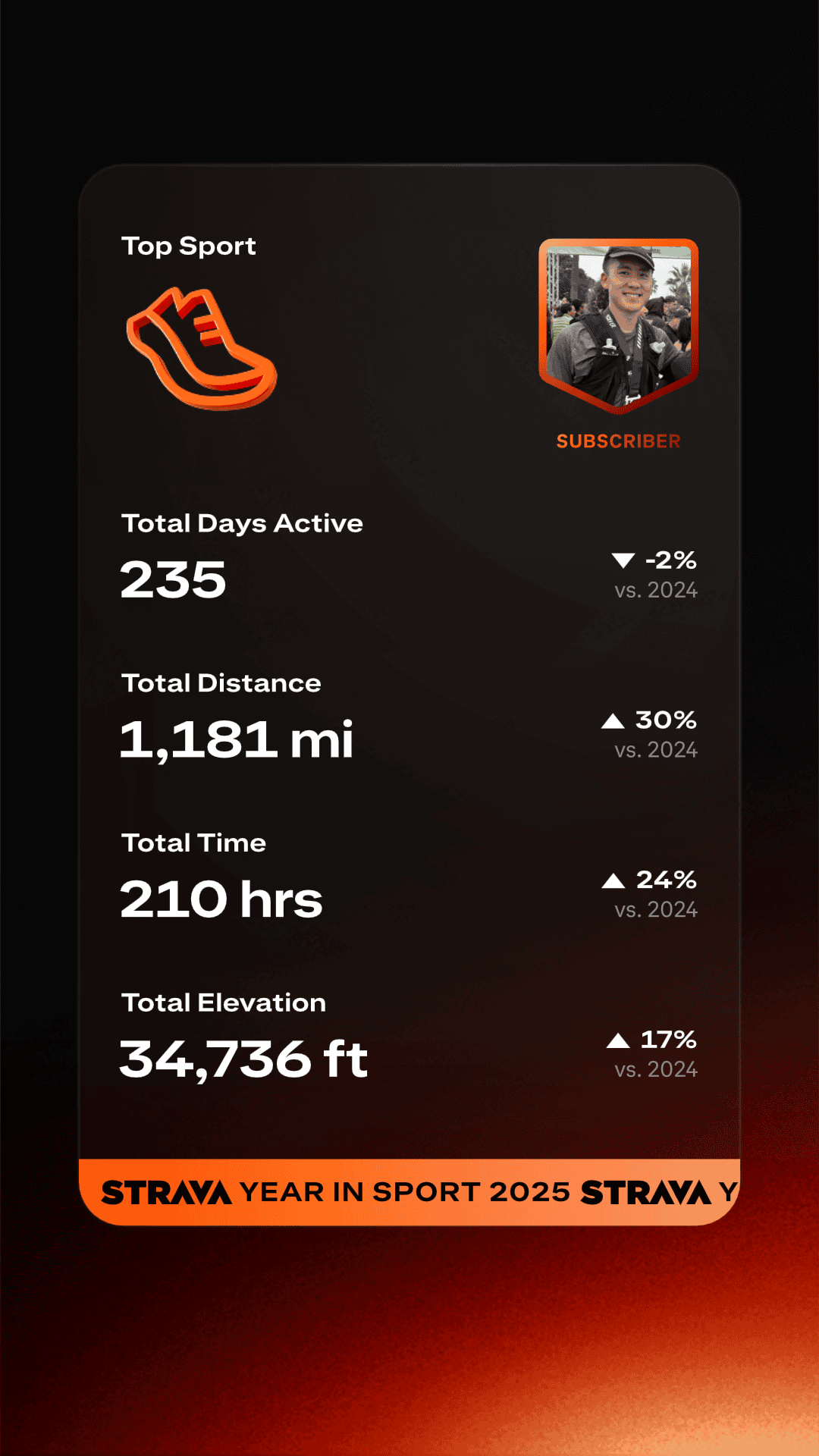
I never considered myself a runner. I actually never enjoyed the activity of running. I usually didn’t look forward to it. I would occasionally still do it because I knew it was good for me. I also usually did enjoy how I felt afterwards, feeling like I put in some work, got my heart pumping and it was generally healthy. Over the past 5 months though, I’ve come to really enjoy running. I’ll share some of the things I’ve learned along the way about running and life. [3,083 words]
The LangChain team recently released the first course in their LangChain Academy called Introduction to LangGraph (repo). As I’m working through it I will make some notes on what I’ve learned. Note many of these snippets were generated using Claude 3.5 Sonnet (passing a prompt and the Jupyter notebook plain text, it did a better job than o1-preview, surprisingly) [1,254 words]
My church is hosting a retreat this weekend and we are privileged to have John Street as our speaker. He was planning to speak on God’s Design for Marriage. I was curious whether he had taught similar sessions before. He actually did at FBC Weston back in 2018. Interestingly he gave 6 sessions (5 + a Q&A). To get a preview, I transcribed all of those talks using my transcripts repo and summarized them using Claude 3.5 Sonnet. [1,968 words]
Dwarkesh Patel is becoming the new Lex Fridman of podcasting. Lex got his start a podcaster interviewing AI experts. Since then Lex has branched out and most of his guests are non AI-experts. Dwarkesh has filled this gap. In this interview, Dan Shipper interviews him: [2,889 words]
A curated list of resources for LLaMA 1 and LLaMA 2 — models, tools, fine-tuning guides, and community projects. Inspired by the awesome-* format. [28 words]
My company, UKG, announced layoffs last Wednesday (see an industry expert’s take on reasons why). 14% of the company was let go which is around 2,200 out of the 15,000 employees. Many of my teammates and friends were let go. I have been a part of companies that have had larger percentage layoffs (>30%). However, the sheer number of people that were affected is somewhat shocking. Considering the number of lives, families, and children that were disrupted is difficult to think about. [573 words]
I started Hamel Husain’s fine-tuning LLM course Mastering LLM course last week. I don’t have a ton of experience fine-tuning LLMs so I thought this would be a good way to learn. [7,245 words]
At Google Cloud Next 2024, Elad Gil interviewed Dario Amodei, the CEO of Anthropic. I recorded the talk (really bad audio) and transcribed it using a whisper (small-en) model. I passed the transcription to Claude 3 (Haiku), Gemini Pro 1.5 and GPT-4 to summarize it with this prompt: [2,283 words]
Andrew Ng gave a talk recently on AI’s Potential Effect on the Labor Force. Here’s the transcript of the video. [374 words]
I’ve been a fan of Costco for many years. Charlie Munger famously loved Costco too. I still remember growing up and going to Price Club with my mom or dad and seeing them write checks because they didn’t accept credit cards yet. There are many reasons to love Costco. It’s honestly one of my favorite places to shop. Some of my favorite things are in no particular order: [1,990 words]
I recently learned about ColBERT, a BERT-based model for efficient passage retrieval. The authors of the paper ColBERT: Efficient and Effective Passage Search via Contextualized Late Interaction over BERT claim that ColBERT is able to achieve state-of-the-art performance on the MS MARCO passage ranking task while being 10x faster than the previous state-of-the-art model. This is a post to summarize my learnings about ColBERT and how it compares to dense retrieval methods like BERT and… [1,632 words]
I didn’t get the chance to attend NeurIPS last week. The sheer number of papers submitted is staggering: 13,300 submitted papers that were reviewed by 1,000+ people. 3,540 papers were accepted and 502 papers were flagged for ethics reviews! [12,611 words]
Google’s latest LLM called Gemini was released in December. Google trained three model sizes: Nano, Gemini and Ultra (small, medium and large respectively). Ultra hasn’t been released publicly yet. There are reports that Gemini has similar performance to gpt-3.5-turbo. Based on lmsys’ Chatbot Arena Leaderboard, Gemini Pro’s Elo is 1111 while gpt-3.5-turbo-0613 is a tick higher at 1117 (as of this writing 2023-12-26). [2,035 words]
Whisper is a speech recognition model by OpenAI that is open source. It is a multi-task, multilingual model that can perform speech recognition, speech translation and language identification. It was released in September 2022 and achieved state of the art results. The latest model is whisper-large-v3 which OpenAI released on their Dev Day. [331 words]
sywx was the first to define the job title “AI Engineer” as a role in between a Data Scientist and Full Stack Software Engineer, someone that builds on top of large foundation models and can quickly build services using these models. I agree with him that this job function will likely expand whether you hold the job title of “AI Engineer” or not. [6,019 words]
I have been interested in how language models will affect the future of work. Having worked with LLMs the last ~6 months, I’ve seen their impact on my work as a data scientist. Jason Wei gave a talk at KDD 2023 called Scaling, Emergence and Reasoning in Large Language Models that was great. He works at the intersection of LLMs and AI Research and has a good view into how LLMs will change the field of AI Research. We need this same sort of thinking applied in other fields to get a sense for how… [1,836 words]
I attended KDD 2023 which was held in Long Beach, CA from Aug 6-10, 2023. [44 words]
At KDD2023 I was introduced to the term “Double Machine Learning” (DML). I was surprised I had never heard the term before so here are some notes on this important method in causal machine learning from a conversation with GPT-4. I am very impressed with GPT-4’s ability to help explain complex concepts especially in areas where there there are libraries and code involved. [3,147 words]
I attended KDD 2023 which was held in Long Beach, CA from Aug 6-10. The first day I attended was Monday which had half-day workshops around a topic. The two I attended were about LLMs (because I’m interested and it’s relevant to my work) and Causal Inference (because I haven’t used causal machine learning techniques in practice before and wanted exposure). [3,077 words]
Llama2 was released by Meta on 2023-07-18. My first exposure to the model was running it locally on my Mac and being blown away by the quality of the results. With most of the prompts I tried for simple questions, Llama2-Chat-13B was better than even ChatGPT. So I was naturally curious about the technical details of the Llama2 paper. In the post I’d like to summarize the technical paper. [2,996 words]
Llama2 was released by Meta 2 days ago. See the: [1,341 words]
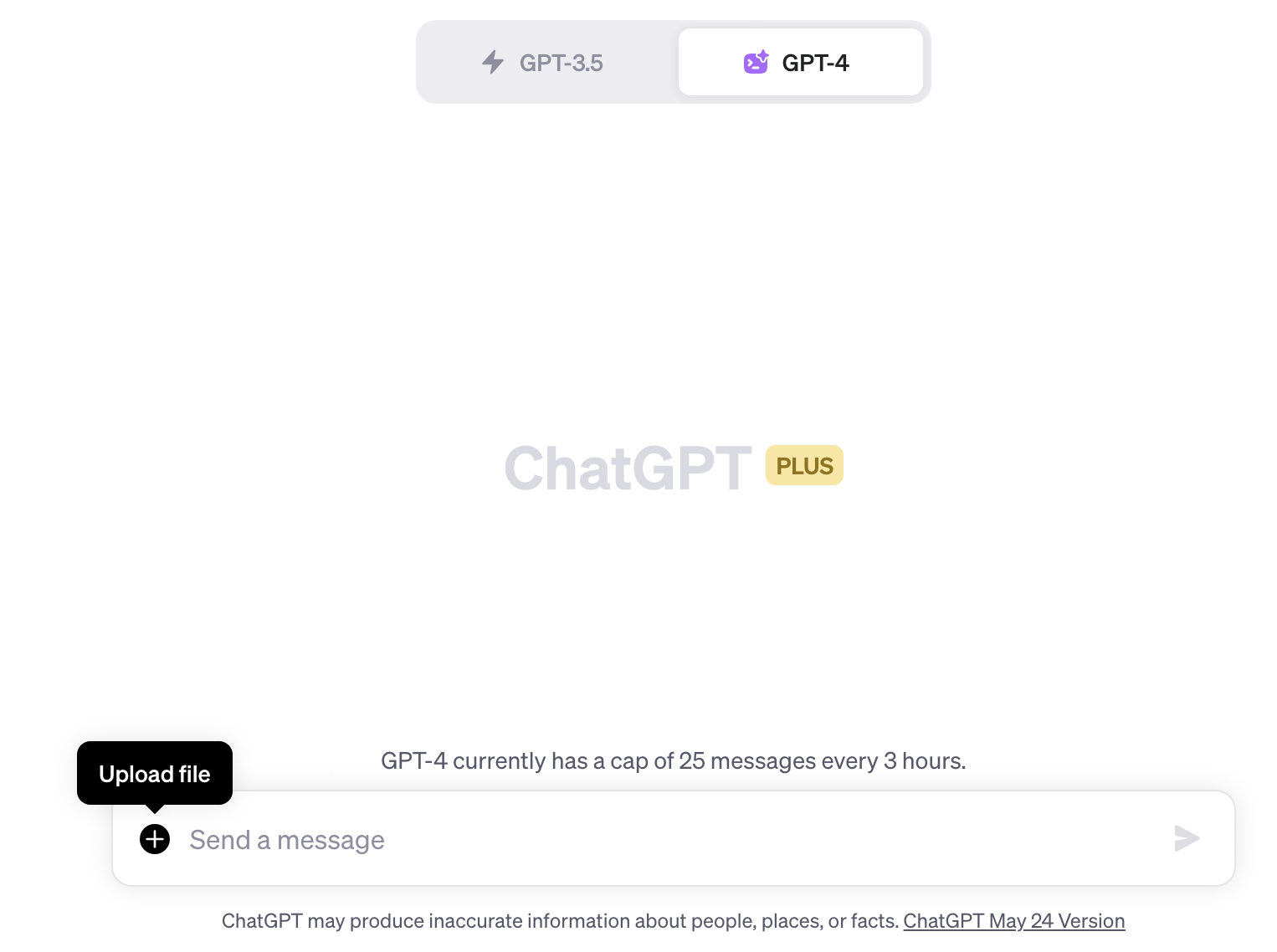
In this post I’ll go over some observations I’ve had while using OpenAI’s Code Interpreter for the first time. It is not available as an API, rather only through the ChatGPT web interface for ChatGPT Plus subscribers ($20/month). [4,852 words]
I’m currently working my way through the Databricks LLM101x Course on EdX. It’s actually pretty good. During the third section, there was this interesting example where they created a data science agent called DaScie. Given a prompt, the agent was able to carry out some interesting tasks. [1,392 words]
This WSJ article highlighted AI’s impact on marketing related roles. In one the paragraphs, a statistic was cited that I had never seen before, the number of layoffs that were attributed to AI. [121 words]
Walter Isaacson is set to release a biography of Elon Musk later this year. He was recently on a Twitter Space with a few other people talking about Musk. One of the things that stood out to me was Isaacson’s description of Musk’s ability to focus. Here’s a transcript of what he said: [518 words]
I didn’t get to attend the LLM in Production Conference but found these takeaways Demetrios Brinkmann shared in an email to be quite insightful: [180 words]
Andrej Karpathy gave a talk at a Microsoft conference in late May about the State of GPT: [846 words]
During Episode 132 of the All-In Podcast, (transcript here) the hosts took a live question from the audience: [1,031 words]
The WSJ’s Ben Cohen wrote an article highlighting Professor Po-Shen Loh, a math professor from Carnegie Mellon University and coach for Team USA’s International Mathematical Olympiad. He’s currently touring the country with a mission to inspire a love of mathematics and provide practical guidance for the new challenges brought by AI and tools like ChatGPT (giving 50 lectures in 32 cities in 35 days!). Loh’s message is clear: to survive in this era of artificial intelligence, one must lean into… [526 words]
Last month, Allen Downey showcased the power of ChatGPT by using it to solve every problem in his Think Python books. As a result, he encouraged everyone who writes code to use LLM-assistance in their development. This inspired me to further explore the capabilities of GPT-4 and its potential effects on work and productivity. [1,030 words]
There’s seemingly a firehose of development in the last month or so. I’ve been trying to keep up with the latest developments in GPT and related models. Here’s a list of papers, code, and news that I’ve found interesting. This is mainly for myself to have a reference, but I hope it’s useful to others as well. I was largely inspired by @osanseviero who created ml_timeline. [700 words]
In this blog post, I’ll introduce you to a list of useful applications, covering both developer tools and productivity applications that I’ve found useful over the years. I’ll also provide you with a brief overview of each app, including its key features and how it can help you improve your workflow. This is mostly Mac focused, though some of these are available on other operating systems. [834 words]