External Memory is important for both people and AI - Part 1 (People)
External memory for both people and AI has been on my mind the last few weeks. I’m amazed at how useful these external memory systems are for increasing human and AI effectiveness. For people, there is a whole branch of study called PKM or Personal Knowledge Management. There are so many tools nowadays that help with this like Obsidian, Notion or Apple Notes. I’ve always been one to write things down because I have a poor memory. I learned quickly if I wanted to remember something I had to write it down. I also learned I needed to write it down in a place I could find later on. I used Evernote for a few years and it was serviceable. Then I switched to Workflowy and I’ve probably been a happy user for 10+ years now. Workflowy allows you to make infinitely nestable lists that you can click into. It fit my brain or maybe my brain started adjusting to how the software was designed.
This is one of my uses of Workflowy: a taxes section under finances. I’d create a new list for each year. Any time something came up that was tax related, a deduction I wanted to remember for example or an I-Bond sale when I used to own them, I would make a note. Then come tax filing time, taxes were quite pain free, possibly even enjoyable? 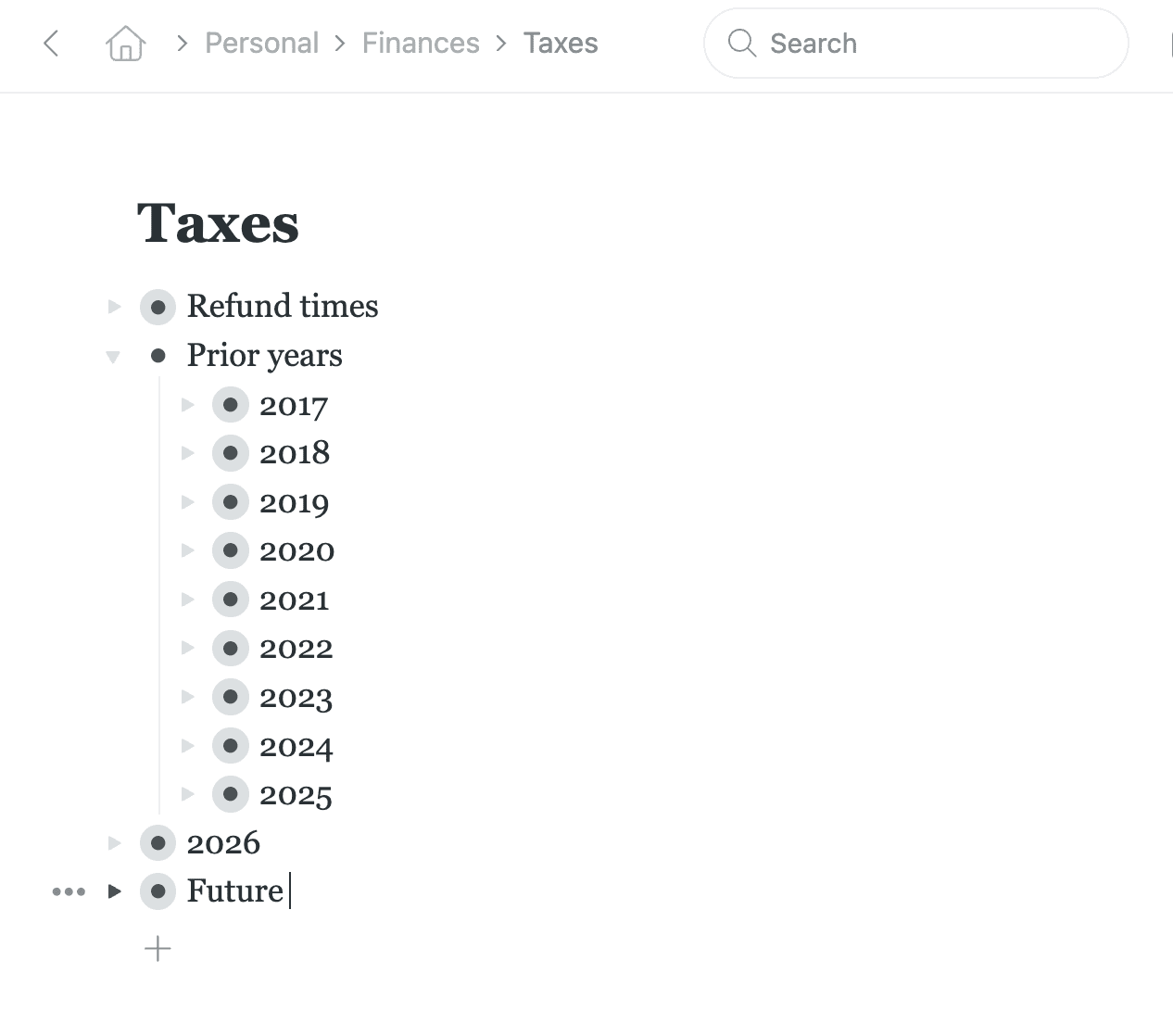
I tried switching to Obsidian last year because I was intrigued at storing my notes in plain text and markdown. I knew agents would work more effectively with markdown. But it didn’t click for me. One of the reasons was I tried also using AI to create notes and manage my Obsidian for me. That got me all confused because part of the value of a human-managed PKM is you know where things are AND you know how things are worded. It’s like your home. If you put something away, you’ll be more likely to remember where it is. When the AI started filing things for me, I was somewhat at a loss at finding information.
I recently read the book How to Take Smart Notes by Sonke Ahrens. He writes about the idea of the “slipbox” which is the German translation of zettelkasten. The general idea you take notes about things you read/listen to/watch. This is the capture step. I did this before in Workflowy so this isn’t new to me. But the next step is key. At another time, usually at the end or beginning of a day, you review these notes, what you’ve learned and write a new note, promoting an idea into something the “slipbox” where you codify the learning. You also have to make connections with other ideas in the slipbox. On a side note, this is one of the things I love about Obsidian, how easy it is to make links between notes. I could do this in Workflowy but it wasn’t a native feature at the time. In Obsidian, I can type two “[” and I can quickly find notes to link to. Though I just checked and Workflowy now has this feature too.
For example in my slipbox, I have a note called Memory is important for both humans and AI. I connected it to 2 other slipbox notes. One was about AI capability compounding because of models, harnesses and skills all improving together but external memory is another potential axis of compounding improvement. This note being my slipbox made it so I came across it a few times after I had written it. And it led me to consider writing this series about memory. 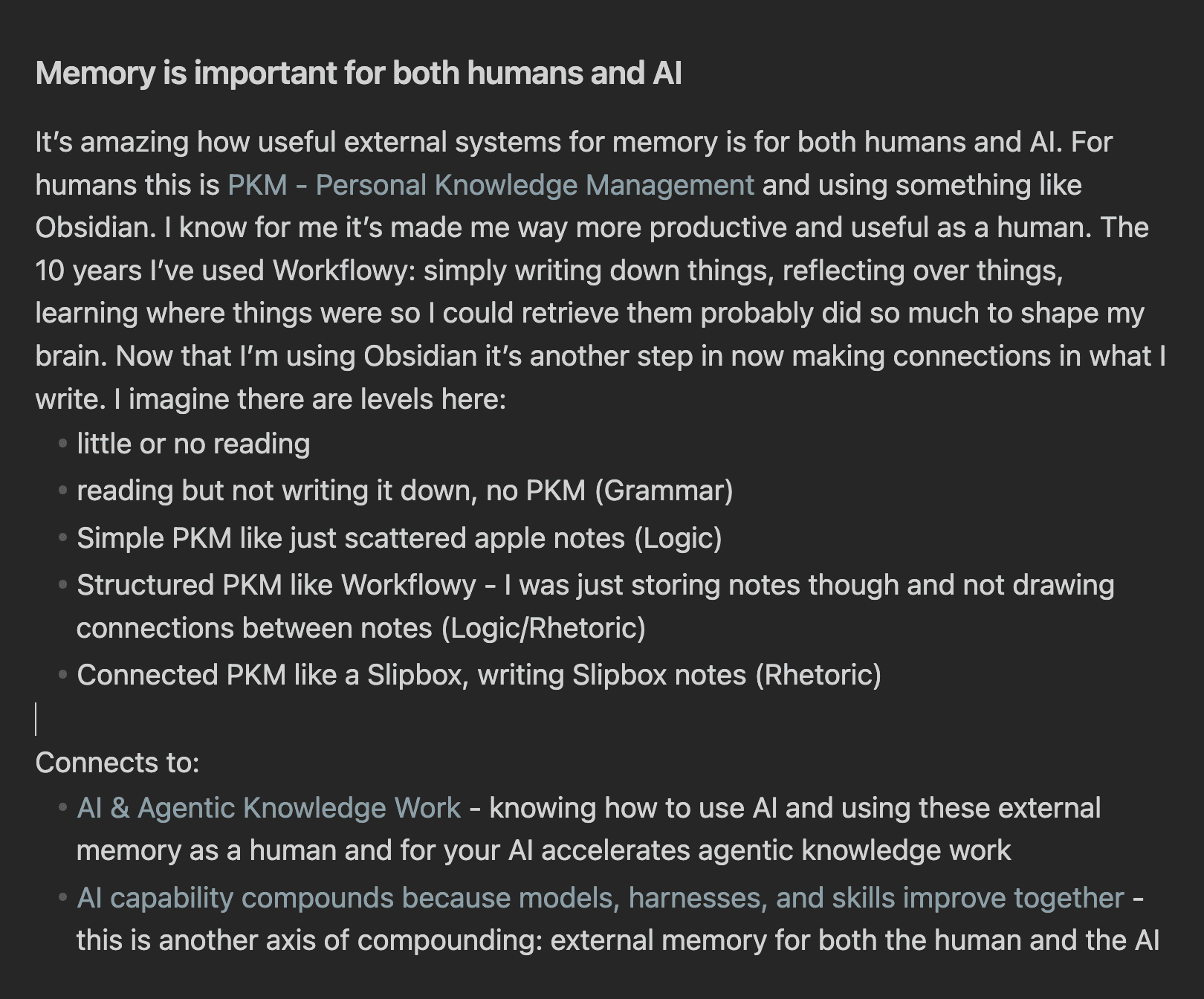
It’s been a few weeks since I’ve started writing notes into a slipbox. I can’t say I’m used to it yet but I do see the value of it. The author of How to Take Smart Notes was inspired by Niklas Luhmann. Luhmann was a German sociologist who used a slipbox. Amazingly it was a physical slipbox with actual index cards. Over his career he built a zettelkasten/slipbox of 90,000 cards! People say his slipbox is what allowed him to publish 70 books and 400 scholarly articles across a vast array of subjects.
This is a picture of his slipbox. I still can’t believe he hand maintained the links between the physical cards! 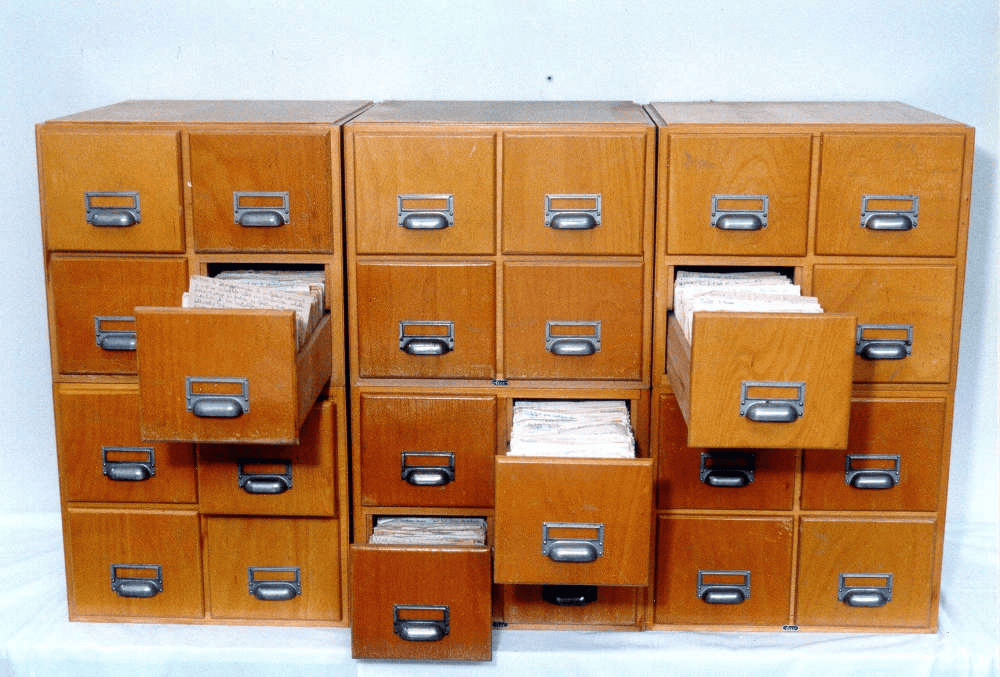
I imagine using Workflowy over a 10 year period has shaped my mind a certain way and allowed me to remember certain things. Simply writing down things, reflecting over things, learning where things were so I could retrieve them probably did change me. Now, as I’ve used Obsidian more and specifically writing notes into the slipbox I’ve observed being able to make some connections across things I’ve been thinking about like: AI, theology, personal finances and homeschooling.
As I reflect on the different amounts of complexity of intaking information and organizing it, there are levels:
- Little or no reading
- Reading but not writing it down, no PKM
- Simple PKM, somewhat scattered though
- Structured PKM by categories or areas of responsibility
- Connected PKM like a slipbox, writing slipbox notes
I had listed writing in my top 10 human skills. Growing up I didn’t enjoy writing. AP English and AP Literature were a slog. A few years ago, I started Phase 2 of the ACBC Biblical Counseling certification which requires writing 40+ essays. Through writing those essays, I grew to appreciate the practice of writing. It required researching a given theology or counseling topic, finding Scripture, listening to lectures, writing notes down, organizing the notes into an outline and then turning the outline into a 1-1.5 page essay. AI almost certainly can write a better essay than me but that wasn’t the point. The goal of writing the essays was to be changed: to understand these diverse set of topics and formulate an opinion about it. Using AI would’ve shortchanged me completely.
Using AI to write and organize my notes in Obsidian wasn’t a good idea for that same reason. I was depriving myself of one of the best tools for thinking, writing. I’m excited to keep writing notes and continuing this new practice of writing slipbox notes and seeing what comes out of it!